
How to Upgrade to Rocky Linux 10.1 Without Breaking Your Server
Rocky Linux 10.1 Guide: Upgrade Safely, Handle x86-64-v3, and Harden for Security
Rocky Linux is a free, community-driven Enterprise Linux distribution designed to be binary-compatible with Red Hat Enterprise Linux (RHEL). For teams moving to Rocky Linux 10.1, this release represents a significant technical pivot, specifically regarding hardware baselines and security standards.
Pair Rocky Linux with LycheeIP
What is Rocky Linux and where should you start for downloads?
Rocky Linux provides a stable, "bug-for-bug" compatible alternative to RHEL for those who want enterprise-grade performance without subscription fees. Because it aims for identical behavior at the package level, RHEL-certified applications typically run seamlessly on Rocky.
Which official pages matter for a navigational search?
To ensure you are using authentic, secure images, always start with official channels:
- Download Page: Access ISOs, cloud images, and checksums for rocky linux installation.
- Release Notes: Critical for understanding breaking changes in the 10.x line.
- Documentation: Detailed walkthroughs for server-class configurations.
Which images fit servers, clouds, and containers?
Selecting the right image depends on your deployment environment:
- DVD ISO: Best for bare-metal rocky linux installation where you need a full package set.
- Minimal ISO: Ideal for "production ready" builds that require a reduced attack surface.
- Cloud Images (QCOW2/AMI): Pre-configured for rapid scaling in AWS, Azure, or private clouds.
- OCI Images: Specialized for containerized microservices and Docker environments.
What is new in Rocky Linux 10.1 and why is it trending?
The buzz around Rocky Linux 10.1 centers on its modernized hardware requirements. The most significant shift is the transition to the x86-64-v3 microarchitecture level as the minimum baseline.
Which changes impact older hardware?
By moving to x86-64-v3 (roughly Intel Haswell era and newer), Rocky 10.1 drops support for older x86-64-v2 CPUs. Furthermore, 32-bit package compatibility on x86_64 has been removed. If your stack relies on legacy 32-bit binaries, you must now isolate them in containers or modernize the code.
How do you test CPU compatibility before you reboot?
Before attempting an upgrade, you must verify that your hardware supports the newer instruction sets (like AVX2). You can use this simple pre-flight check:
Python
# Quick Python check for v3-era flags (SSE4.2, AVX, AVX2, etc.)
import re, sys
try:
with open('/proc/cpuinfo', 'r') as f:
content = f.read()
flags = re.search(r'flags\s*:\s*(.*)', content).group(1).split()
required = {"sse4_2", "ssse3", "avx", "avx2", "popcnt"}
missing = sorted(required - set(flags))
print("Status:", "Compatible" if not missing else f"Incompatible. Missing: {missing}")
except Exception as e:
print(f"Check failed: {e}")
Pair Rocky Linux with LycheeIP
How do you upgrade to Rocky Linux 10.1 safely?
Upgrading within the same major version (e.g., 10.0 to 10.1) is a standard package management task. However, moving from Rocky Linux 8 or 9 to 10.1 requires a fresh installation.
The Fresh Install + Restore Pattern
Since major version upgrades are not officially supported for the 10.x line, follow this "Least Risk" workflow:
- Inventory: Export package lists and backup /etc/ configurations.
- Data: Use filesystem snapshots or external backups for application data.
- Rebuild: Perform a clean rocky linux installation on a new instance.
- Restore: Re-apply configurations and verify cybersecurity settings like SELinux.
How LycheeIP fits into your infrastructure
For data-intensive operations like web scraping or fintech auditing on Rocky Linux, your OS is only half the battle. LycheeIP provides the external data infrastructure that complements a hardened server:
- Clean IP Pools: Every IP undergoes a >6-month cooling period to ensure high reputation.
- Operator-Level Resources: IPs are allocated directly from underlying operators for maximum stability.
- Low Latency: Static datacenter proxies offer <50ms latency and 1Gbps+ throughput, perfect for Rocky-based scraping nodes.
- Transparent Management: Real-time statistics via API or a simple web dashboard.
Rocky Linux vs the Competition: A Decision Matrix
Choosing a distribution depends on your team's specific "Job to be Done."
| Feature | Rocky Linux | Ubuntu | Fedora |
| Best For | Production-ready Enterprise | Rapid DevOps / Cloud-native | Cutting-edge Development |
| Lifecycle | Long (10 years) | 5-10 years (LTS) | Short (~13 months) |
| Stability | Conservative/Highly Stable | Balanced | Fast-moving |
| Tradeoff | Older kernels/packages | Non-EL standard | Frequent major upgrades |
Pair Rocky Linux with LycheeIP
Rocky Linux vs AlmaLinux vs Red Hat
The choice between Rocky Linux vs almalinux often comes down to governance. Rocky emphasizes a community-led, "bug-for-bug" RHEL compatibility. When comparing Rocky Linux vs redhat, the primary differentiator is cost versus official vendor support.
How do you install Docker on Rocky Linux 10.1?
To maintain a production ready environment, avoid using unofficial script installers.
- Add the official Docker repository for CentOS/RHEL.
- Install docker-ce, docker-ce-cli, and containerd.io.
- Cybersecurity Tip: Ensure firewalld is configured to handle Docker's iptables rules without exposing internal ports to the public web.
Troubleshooting Common Failures
| Issue | Likely Cause | Recommended Fix |
| Kernel Panic on Boot | Incompatible CPU (Non-v3) | Revert to Rocky 9 or upgrade hardware. |
| Network Script Failure | Deprecated legacy scripts | Migrate all configs to NetworkManager (nmcli). |
| Repo 404 Errors | rocky linux versions mismatch | Clear DNF cache: dnf clean all && dnf makecache. |
| Docker No Connectivity | Firewall/IP Forwarding | Enable net.ipv4.ip_forward=1 in sysctl. |
Assumptions & Limitations
- This guide assumes users have sudo/root access to their systems.
- Hardware compatibility is based on the x86-64-v3 standard; exceptions may exist for specific specialized chipsets.
- "Production ready" status implies the user follows security best practices (e.g., keeping SELinux enabled).
Pair Rocky Linux with LycheeIP
Frequently Asked Questions
1. What is Rocky Linux used for?
It is primarily used for enterprise servers, high-performance computing (HPC), and hosting mission-critical databases where long-term stability is required.
2. Is Rocky Linux free?
Yes. It is open-source and free to use, though third-party vendors like CIQ offer paid enterprise support.
3. Can I upgrade Rocky Linux 9 to 10.1?
No. Major version jumps (9 to 10) are not officially supported. A fresh installation is the recommended path to avoid dependency hell.
4. What does "Production Ready" mean for Rocky?
It means the OS has undergone rigorous testing to ensure it behaves exactly like RHEL, making it suitable for high-stakes environments like fintech or healthcare.
5. How do I check my current Rocky Linux version?
Run cat /etc/os-release in your terminal to see the specific version and ID.
6. Does Rocky Linux 10.1 support RISC-V?
Yes, Rocky 10.1 includes support for RISC-V platforms like StarFive VisionFive 2 and QEMU for testing.

Recommended Articles

SERP API Troubleshooting: Fix Empty, Wrong, or Inconsistent Search Results
SERP API failures are not limited to obvious HTTP errors. A request can return successfully and still produce empty, incomplete, geographically wrong, duplicated, or misinterpreted search data. Production troubleshooting therefore has to separate transport problems from provider processing, SERP differences, and downstream parsing errors.
View Details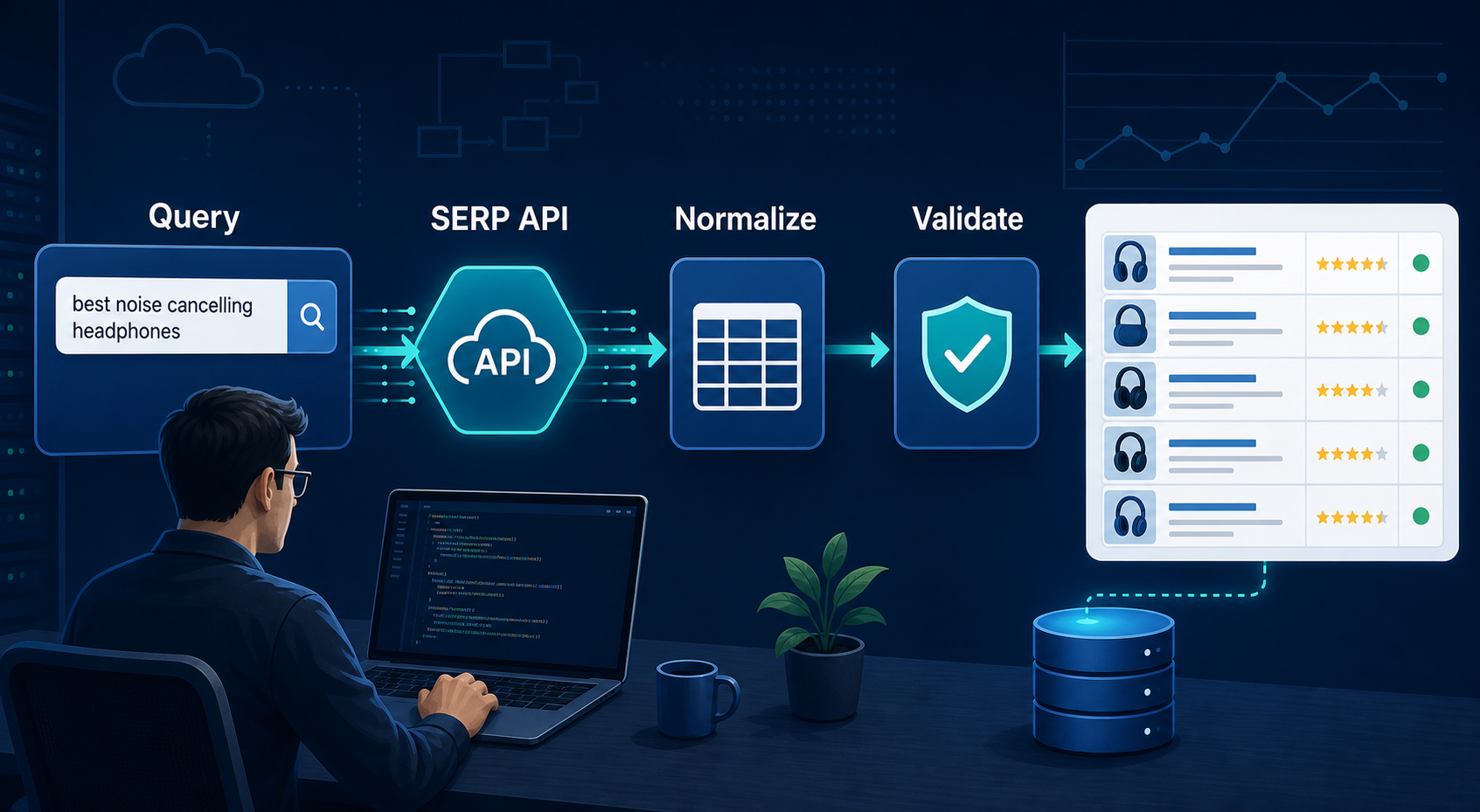
SERP API Python: How to Build a Reliable Search Data Pipeline
This guide shows a provider-neutral workflow for building that pipeline. It does not rank SERP API vendors. Instead, it focuses on the implementation choices that make a Python integration easier to operate, test, and migrate.
View Details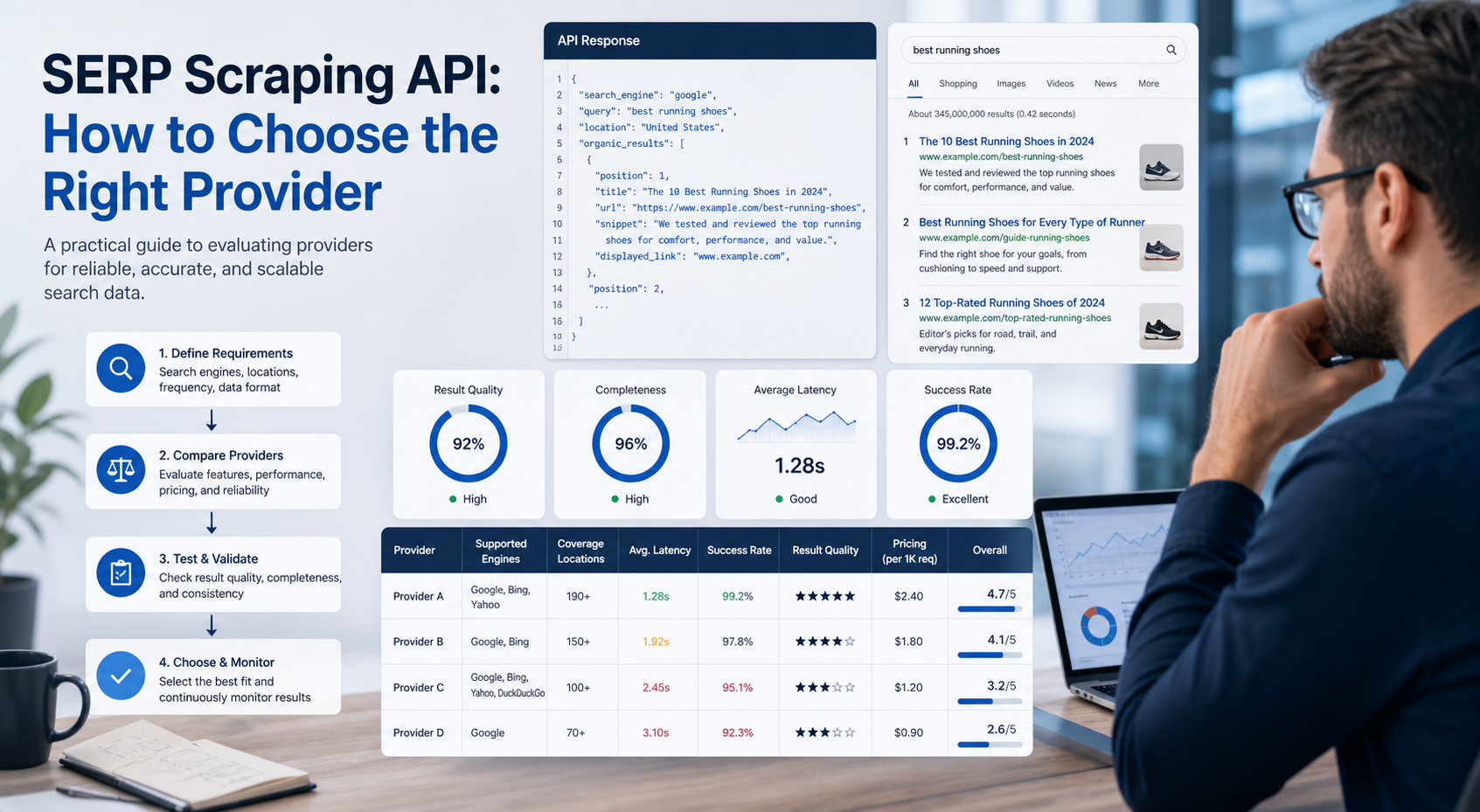
SERP Scraping API: How to Choose the Right Provider
Recommended Meta Description: Compare SERP scraping APIs by data coverage, localization, reliability, workflow fit, and cost structure, then choose and validate the right provider.
View Details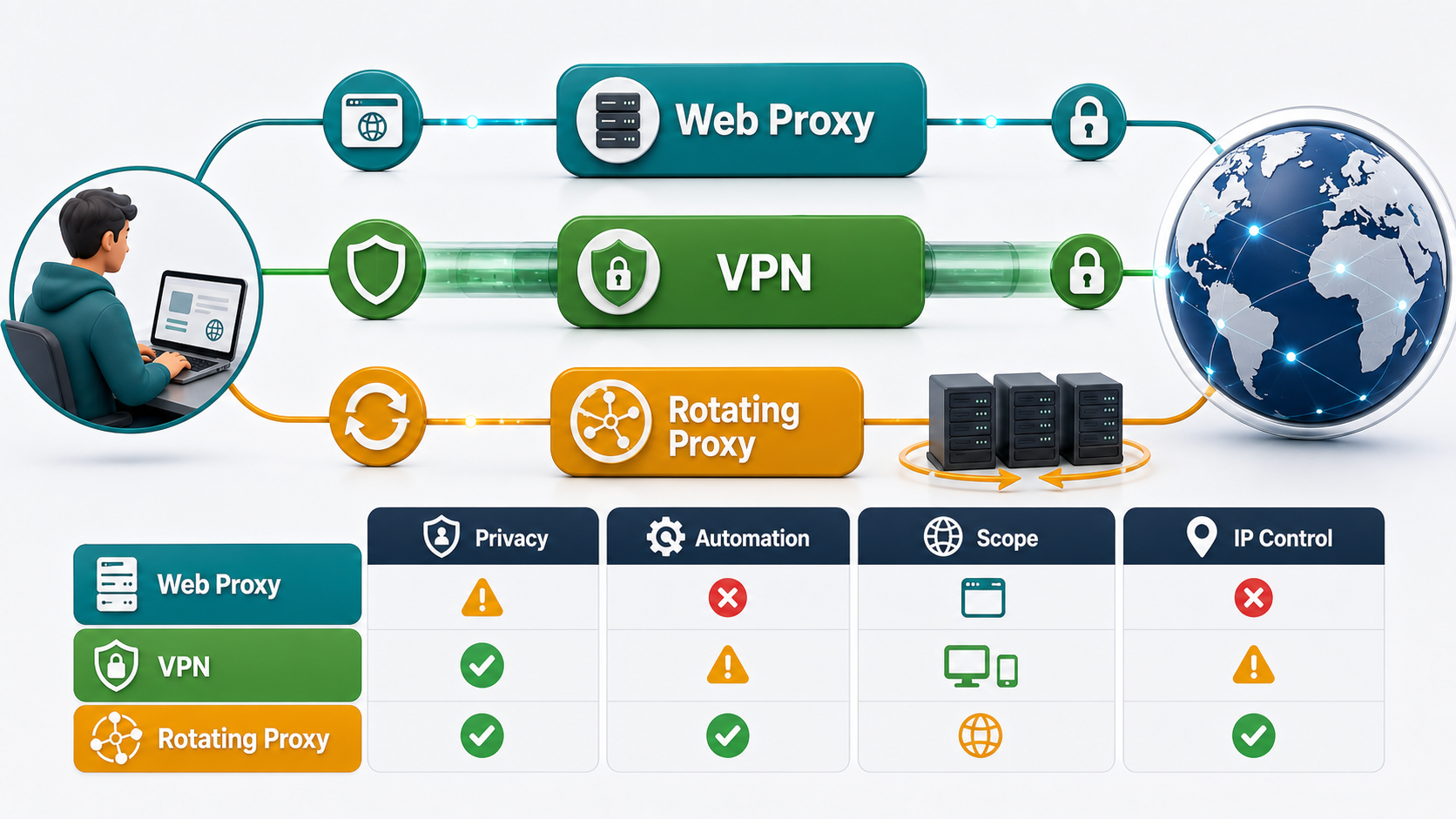
Free Web Proxy vs VPN vs Rotating Proxy: Which Should You Use?
Compare free web proxies, VPNs, rotating proxies, static proxies, and datacenter proxies by scope, encryption, IP control, automation, streaming, and account workflows.
View Details
BlockAway Not Working? Fix Common Proxy, Video, and Access Problems
Troubleshoot BlockAway when pages are blocked, YouTube fails, JavaScript breaks, speed drops, sessions expire, or mobile access behaves differently.
View Details